Quick commerce in Paris
Episto surveyed over 1,000 Parisians to analyze their usage and perceptions of these new services, and to evaluate their long-term development potential.
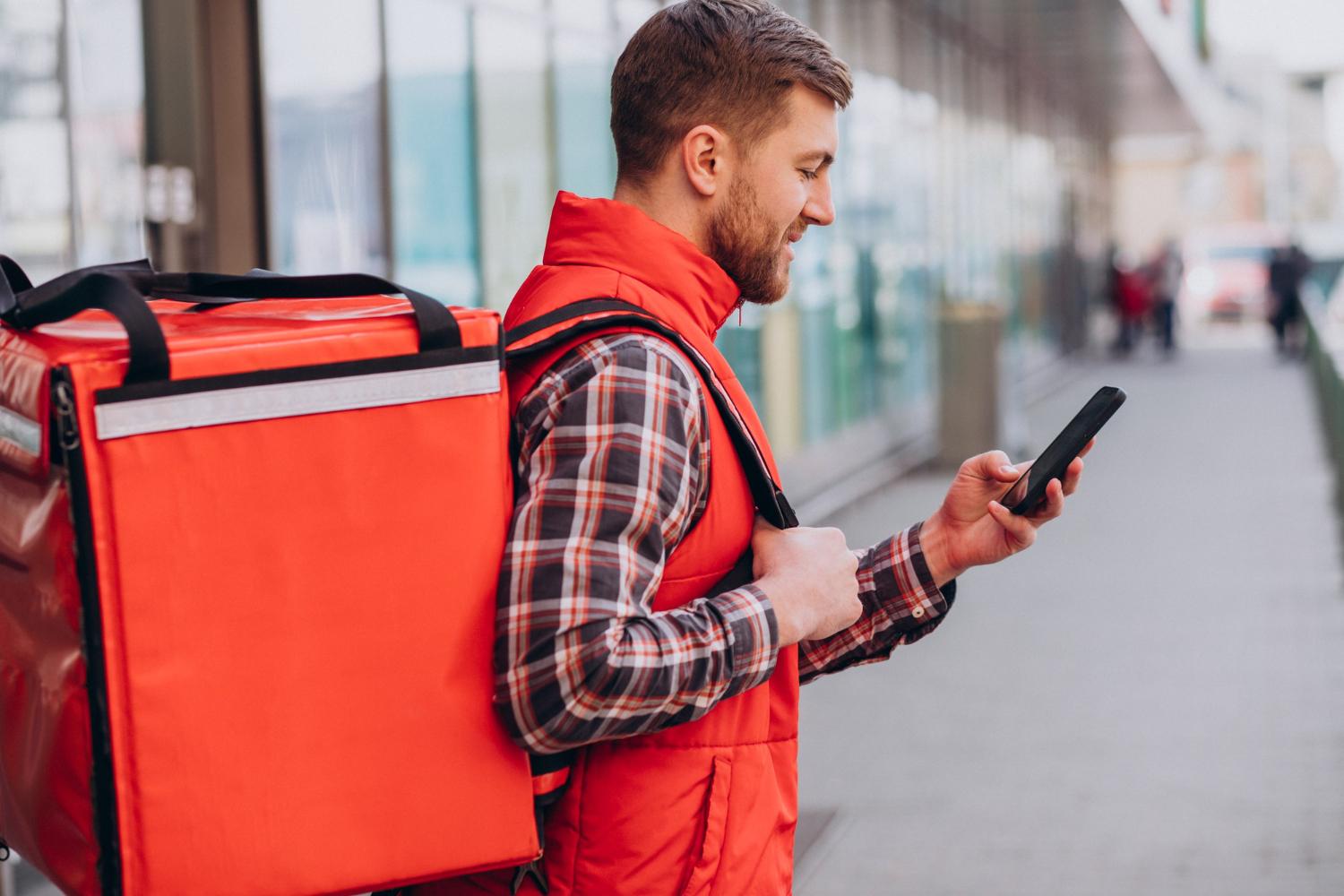
Quick commerce (express grocery delivery in under 30 minutes) burst onto the scene in Paris in early 2021. Massive advertising campaigns and promotions have followed, along with twists in the sector: acquisition of Cajoo by Flink, restructuring and layoffs at Gorillas, closure of Kol and Yango Deli, etc. Meal delivery services have also diversified to invest in this new niche (Frichti, UberEats, Deliveroo). To gauge the scale of the phenomenon and its long-term potential, Episto, a specialist in social media studies, surveyed over 1000 Parisians* to understand their opinions and usage of these new services.
In-store shopping still widely favored
88% of Parisians declare they do their daily shopping in-store, with 84% doing so at least once a week; a trend that could be explained by the high density of supermarkets in Paris and their broad opening hours. Other shopping modes trail far behind: 1 in 5 Parisians regularly have home deliveries from traditional retailers (Carrefour, Leclerc, Monoprix, etc.), and only 1 in 10 through express delivery.
While traditional retailers seem to currently be winning in delivery, quick commerce players can still rely on the loyalty of their users, who order more frequently: 40% order at least once a week, compared to 22% of users of traditional home deliveries."
Quick commerce also appears to have created a entirely new mode of shopping as 2/3 of its users do not utilize home delivery from traditional retailers. It remains to be seen whether the concept will gain new market shares in the coming months. Even though it enjoys strong recognition (85%), the service has only been tested at least once by 19% of Parisians.
Quick commerce users committed to the concept are very attached to delivery times...less to CSR criteria
More than one in two users resort to express delivery to save time in their daily lives (57%), 36% to avoid traveling, and 28% to circumvent store opening hours. Regarding the criteria for choosing one delivery app over another, 48% base their choice on delivery time, 43% on product selection, 41% on price levels, and 35% on promotions.. We find far behind the CSR criteria : the possibility of finding local products (17%), the fact that deliverers are employees or independent (14%), or even their means of transportation - car, scooter, bike…- (12%).
Overall satisfied with their experience (94%), users mostly declare (91%) that they generally find the products they are looking for, even if 83% would appreciate having a wider choice. A trend that could explain that only 14% of users think they will do without other shopping means in the long term ?
Mixed feelings among Parisians about the arrival of these new services
Three main reasons are mentioned by those who do not use quick commerce: 56% state they prefer to choose products in-store, 35% do not see the usefulness of these services and 35% believe they are not in line with their values. Overall, opinion remains very divided between negative (39%) and positive (41%) when Parisians are asked what they think about the development of quick commerce in large cities. Even if the practical aspect of these services is widely acknowledged, they see negative consequences on employment, the environment, and quality of life in cities.
- 54% think they have a negative impact on the environment.
- 63% think they have a negative impact on job quality.
- 70% think they have a negative impact on local businesses.
- 75% believe that quick commerce should be more regulated.
Focus on those under 30, 'early adopters' of quick commerce
94% of Parisians under 30 are familiar with the concept and 29% have already used it.
In their choice of delivery app, they are more motivated by economic issues than the average of the overall sample : their number one criterion is the price level (53%), followed by promotions (50%). 1 in 4 users under 30 says they turn to quick commerce to save money. Their usage is festive : 34% order alcoholic beverages (vs 22% on average), during happy hour (31% vs 20% on average) or during the night (38% vs 27% on average).
“In just a year and a half, quick commerce services have made their mark in Paris, aided by extensive advertising campaigns and massive promotions. Today, express grocery delivery is a concept known by a large majority of Parisians. Its 'early adopters' are still few in number (more so among those under 30) but are won over: they express real satisfaction and order very regularly. The question remains whether quick commerce players will be able to maintain this momentum and establish themselves sustainably in the market, given Parisians' attachment to their in-store shopping habits and their critical view on the implications of such activities on employment, the environment, or local businesses. More than just a new service, quick commerce embodies a societal evolution that is part of a reflection on 'better living' in the city. Practicality, time-saving, and everyday improvement clash with quality of life in our cities. Like Uber or Airbnb, the time for regulation (which Parisians seem to be calling for) will soon come, and the challenge will be to combine the benefits of these services with the preservation of the urban ecosystem,” comments Jérémy Lefebvre, CEO of Episto.
Methodology of the study
Representative sample of the Parisian population according to the quota method: 1028 respondents.
Study dates: from May 10 to 17, 2022.
Source of respondents: Facebook and Instagram.
Read next

Articles
Gen Z & Alcohol: Why your consumer insights struggle to decode this generation's new sobriety
Discover the blind spots preventing the beverage industry from anticipating the non-alcoholic shift, along with an analysis of the market's new potential.
Articles
Gen Z and luxury: what new consumers really desire
Generation Z will represent a major share of the luxury market by 2030. Yet, brands are overlooking a reality that only a thorough qualitative study can capture.