Why do social media surveys allow for the collection of authentic responses?
Let’s take a closer look at the reasons that give this methodology the power to gather quality insights...

01. The relevance of recruited profiles
By only targeting qualified users through the precise filtering criteria of social networks, this methodology ensures that respondents strictly match the target population. This precise alignment guarantees the optimal quality of the insights collected. These respondents are everyday consumers or professionals who, for the most part, are not registered on traditional survey panels, meaning they are neither over-solicited nor motivated solely by incentives.


Verifying respondent qualifications through professional expertise
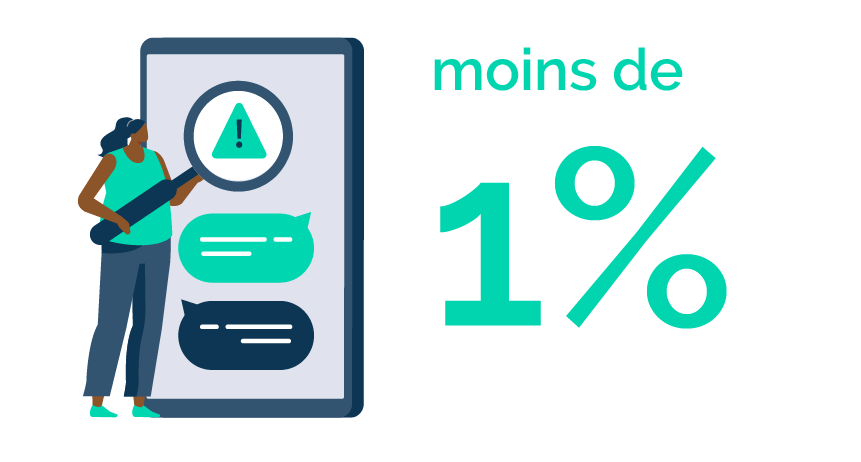
Some might believe it is impossible to verify the identity of respondents on social networks, fearing that unqualified individuals will skew the study's results. Here is a test we conducted to prove the reliability of our audience: during a survey aimed at hairdressers, we inserted a trick question about the products these professionals use. Two of the products included in the list were actually retail items sold only to the general public, never used by professionals in a salon. In total, less than 1% of respondents selected these two items proving conclusively that the recruited profiles were indeed real, qualified hairdressers.
02. The engagement of respondents
At Episto, we are convinced that this is the sine qua non condition for collecting high-quality responses and insights that reflect reality. This approach allows respondents to express their opinions with care and authenticity, almost making them forget they are taking a survey.
Respondent engagement is driven by a playful, gamified interface that makes the experience unique and enjoyable, alongside an empowering aspect that values individuals who aren't typically asked for their opinion. Beyond guaranteeing the reliability of the recruited profiles, the precise targeting enabled by social networks allows us to reach a truly engaged audience that genuinely cares about the study's theme.

Understanding kitchen waste sorting through video analysis

To understand sorting habits in their kitchens, we interviewed 300 respondents and collected videos where they filmed their own waste-sorting setups at home. These valuable and authentic insights allowed for a real immersion into the homes of Parisians, providing a much better understanding of their daily practices.
03. The authenticity of responses
One of the main advantages of studies through social media is that this methodology allows for the collection of authentic responses. What does that mean? By authentic we mean sincere and spontaneous responses that truly reflect the opinions of the surveyed individuals without the interference of external disturbing factors.
Social media studies provide guarantees of authenticity that are linked to:
- The respondents:
- Not accustomed to answering surveys, they are not “professionals” in studies
- Not paid and therefore not motivated by the lure of gain
- The use of smartphones:
- A personal tool they are comfortable with
- And that they use when they are available
- The questionnaire:
- Designed from the start for mobile use
- Self-administered, at their own pace, in conditions that suit them
- Engaging and conversational
With this method, respondents no longer feel like they are filling out a questionnaire but rather participating in a conversation!

Want to learn more?
Read next

Articles
AI-powered research for better insights
Discover how AI transforms every step of your surveys to gather reliable and actionable insights in just a few clicks.

Articles
The 8 best questions from our CSMs to ask AI Insights 🪄
AI Insights, Episto's new AI assistant, analyzes your studies and answers your questions with optimized prompts to compare, segment, and structure your results.