How to avoid bias in your questionnaires?
A well-designed questionnaire ensures you collect the most authentic, reliable, and realistic responses from your participants.

A well-constructed questionnaire allows you to gather the most authentic, reliable, and realistic responses from your participants. It is therefore crucial to eliminate any risk of biasing their answers.
💡 A bias is an element that systematically alters the authenticity of the interaction (direct or indirect) between the respondent and the researcher.
Here are some simple and effective ways to avoid bias in your surveys:
- Avoid yes/no questions
- Do not ask leading questions
- Pay attention to the order of questions and answers
- Prioritize anonymity whenever possible
- Clarify your language
- Eliminate assumptions
- Sometimes prefer open-ended questions
Avoid yes/no questions
Try to avoid questions that can be answered with a simple yes or no. Respondents tend to answer yes to appear positive and ambitious, a phenomenon known as acquiescence bias.
Instead, rephrase your questions. For a concept test, rather than asking "Do you find it essential to have nice packaging when you buy cookies?", ask: "Which of the following elements do you find essential when purchasing cookies?"
Do not ask leading questions
Be cautious of leading questions that push respondents to answer the way you want them to, which can result in confirmation bias. You can remedy this by avoiding unnecessary adjectives in your questionnaire. For example, instead of asking "What do you think of the delicious chocolate [brand]?", ask: "What do you think of the chocolate [brand]?"
Keep in mind that scale question options can also be leading. Ensure your scale questions include an equal number of positive and negative options, avoiding scales that lean heavily or exclusively toward positive choices.
Pay attention to the order
The way you order your questions and responses affects how people react. This is known as the order bias.
In questions
Order bias occurs when a previous question or item impacts how respondents perceive the rest of the survey. For example, if you present a series of advertisements, all subsequent ones will likely be compared to the first few in the respondent's mind, even unconsciously.
Here is what you can do to avoid order bias in your questions:
- Progress from general to specific: Avoid giving away the context or answers to upcoming questions in previous ones. Structure your survey so it moves logically from the most general topics at the beginning to the most specific toward the end.
- Randomize question order: Whenever possible, ask your questions randomly. The Episto platform includes a feature that allows you to shuffle the order of the questions in your questionnaire automatically.
In responses
The answers chosen can also be influenced by the order in which they are presented, as people are naturally more likely to pick the options at the top of a list. When this happens, you fail to get an accurate representation of your audience's true opinions.
To combat this, Episto's platform allows you to randomize response options. It is highly recommended to do this for all lists of choices, except when using scale responses (e.g., from "Strongly disagree" to "Strongly agree").
Prioritize anonymity whenever possible
Don't disclose your identity (or your brand)! If you do, you risk causing sponsorship bias, which means respondents may feel compelled to give overly positive feedback about the brand hosting the survey. Masking your identity also prevents respondents' prior perceptions of your brand from clouding their answers.
While you generally want to know what consumers think of your company, there are times you need feedback completely independent of your image. For instance, when conducting research on new product development, you want raw consumer opinions without your brand's existing image whether positive or negative influencing the results.
During recruitment campaigns on social media, Episto systematically avoids citing or mentioning the brand to prevent this sponsorship bias.
Clarify your language
Avoid confusing respondents or leaving room for interpretation in the responses by being objective in your language. For example, instead of using terms like "recently," "often," or "rarely," specify the time period as "daily," "weekly," or "once a year." Make sure you know how your ideal customer speaks, which will help you tailor your language.
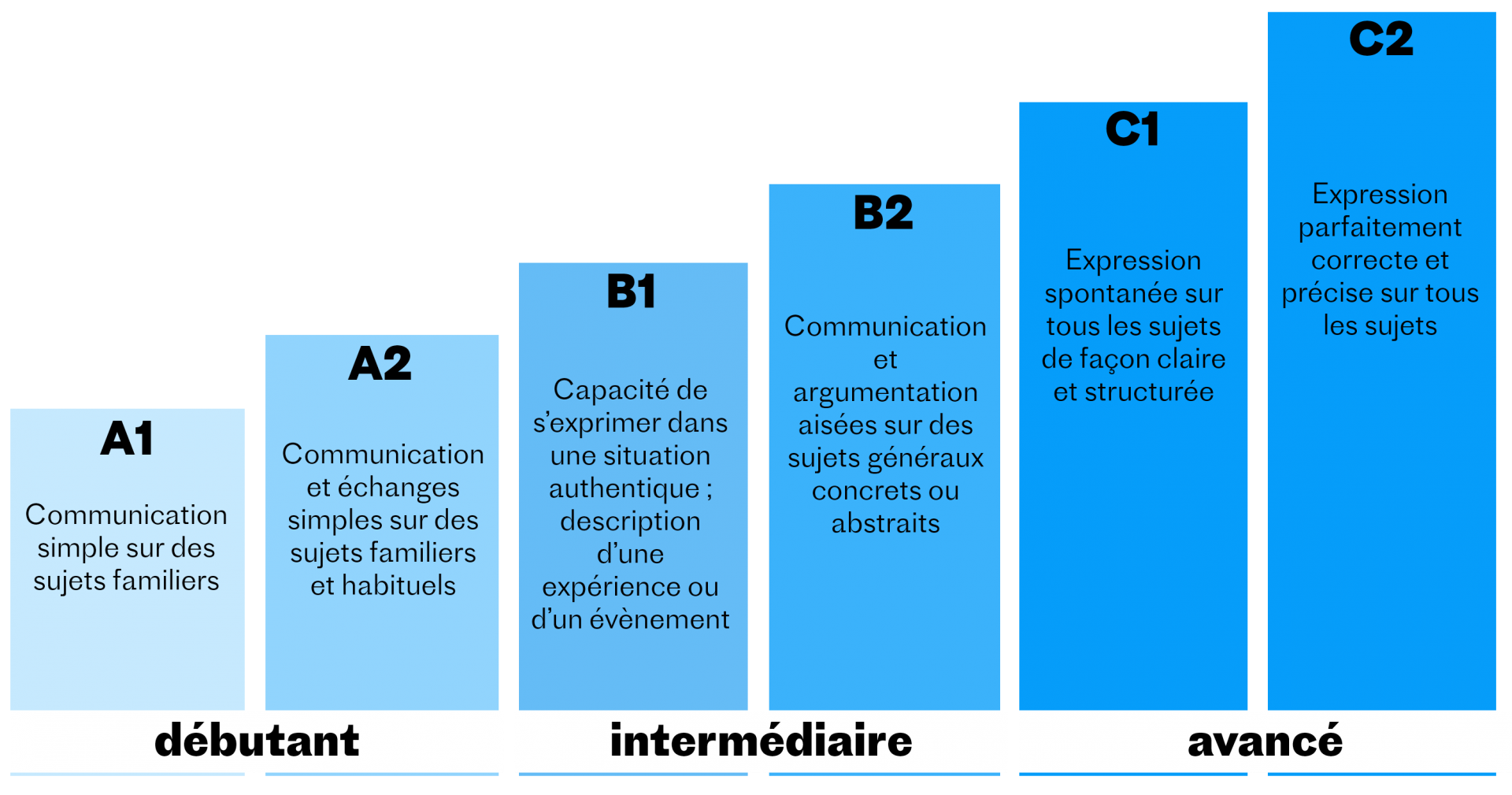
There are 6 levels of proficiency in the French language from A1 (beginner level) to C2 (perfectly correct expression on all subjects). The plain language corresponds to the B1 level, which is understood and mastered by 95% of the population. Therefore, it is advisable to use this level of language in your questionnaires to be understood by all your respondents. Also, don't forget to limit anglicisms and explain all technical terms that you will need to use in your questionnaire.
Eliminate assumptions
Avoid making assumptions that force respondents to answer dishonestly. You can easily remedy this by asking yourself whether you should include the options "None," "Not applicable," and "Other" in your list of responses. For example, the question "What type of laptop do you own?" assumes that the respondent owns a laptop; you should ensure they can answer honestly by adding the options "None" or "Not applicable."
Instead of "What did you enjoy about your last vacation?", rephrase the question into two distinct parts: "What did you think of your last vacation?" "Very pleasant," "Fairly pleasant," etc. Don’t forget to add an option for the response "I did not take a vacation [in the past year]," then follow this question with an open question like "Why do you think that?" With Episto, it is even possible to customize the wording of a question based on the answer given to the previous question.
Sometimes prefer open questions
Favor open questions if you're not sure you can provide an exhaustive list of responses. In this case, to avoid any bias, you would do better to analyze written answers rather than constrain responses into an exclusive choice.
For instance, when you propose brand names from a specific sector, it's not complicated to provide respondents with a simple exhaustive list of brand names. However, when it comes to reasons why respondents wear makeup or go on vacation, some answers may be unexpected but no less interesting!
Thanks to the smart features of the Episto platform, it will be easy for you to analyze these open responses and take into account unexpected answers.
Do you want to build a questionnaire suitable for social media studies that truly engages your respondents? Check out this article to discover Episto's tips.
Read next

Articles
AI-powered research for better insights
Discover how AI transforms every step of your surveys to gather reliable and actionable insights in just a few clicks.

Articles
The 8 best questions from our CSMs to ask AI Insights 🪄
AI Insights, Episto's new AI assistant, analyzes your studies and answers your questions with optimized prompts to compare, segment, and structure your results.